Emotional Literacy Support Assistants (ELSA) at Our School
Emotional Literacy Support Assistants (ELSA)
At Oak Hill, everything we do is rooted in our vision: “In love, we learn, grow and flourish.” We believe that children thrive when they feel safe, valued and supported, not only academically but emotionally too. To help us nurture the whole child, we use the ELSA (Emotional Literacy Support Assistant) programme as a key part of our pastoral care.
We chose to embed ELSA in our school because it reflects our commitment to love, care and belonging. When children feel emotionally supported, they are better able to engage with learning and flourish in all areas of school life. ELSA enables us to:
-
offer early, nurturing support before difficulties grow
-
build trusting relationships grounded in empathy
-
help children understand themselves and others
-
ensure every child feels seen, heard and valued
This approach strengthens children’s readiness to learn and helps them grow into confident, resilient individuals.

What is ELSA
Emotional literacy is the ability to identity how one is feeling. Why they are feeling that be able to express that feeling using healthy strategies to self-regulate.
ELSA’s are trained and regulated supervised by educational psychologist, to plan, deliver targeted individual or small group interventions to those who have been identified as needing Social, emotional, and mental health needs (SEMH). It is designed to enhance the schools capacity to support the children’s emotional wellbeing and resilience.
What is ELSA?
ELSA sessions take time to plan, are bespoke, engaging and accessible to the individual child and their circumstances. It is not a reactive approach. The individual’s progress is tracked.
ELSA sessions help children recognise, understand and manage emotions to raise their self-esteem, improve their peer relationships, recover from significant bereavement or loss and resolve conflict effectively.
ELSA provides proactive interventions to prevent SEMH from escalating. Trained ELSA’s are not licensed therapists and do not provide therapy.
ELSA requires consistency in the time and place to help children feel prioritised, safe and able to open up about their SEMH. ELSA is important and an effective and impactful tool for the school that can be used without relying on outside agencies.
What SEMH difficulties can ELSA help?
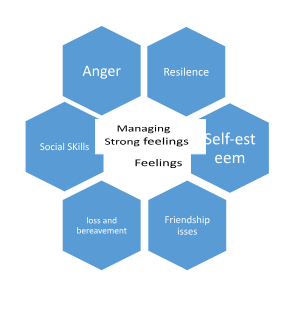
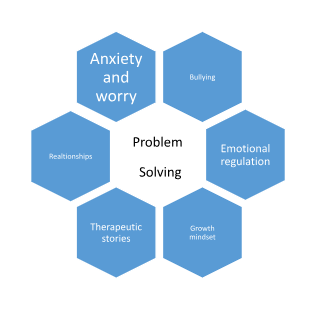
How the children are referred to receive ELSA support?

-
Their class teacher, the Head Teacher or SENCO, refers children to the ELSA.
-
There are termly meeting to discuss and prioritise referrals.
-
Depending on the need of the child, they are seen either in small groups or individually for 30-45 minute session a week.
-
A co-ordinated plan to target the child’s specific needs is co-produced between the class teacher, ELSA and the child.
-
The ELSA or SENCo communicates with the parents or guardians at the start and end of the sessions to answer any questions they might have.
Rationale for ELSA in Gloucestershire
Adverse Childhood Experiences (ACEs) or vulnerability factors can affect the long-term outcomes of child or young person.
However, Research in to ACE’s has shown stable, nurturing adult-child relationships and environment helps children and young people to develop resilience to flourish as adults.
The main aim of ELSA is to promote these stable, nurturing adult-built relationships and environments and become ‘key adults’ for vulnerable children and young people.
Who are the school's ELSA’s?